

Key Takeaways
- Hair density measures how many strands grow within a particular area of your scalp.
- Hair thickness describes the diameter of each strand, determining whether your hair is fine, medium or coarse.
- You can have fine but dense hair, or thick individual strands with low overall density.
- Haircare products can improve fullness and reduce breakage, but they do not necessarily increase hair growth.
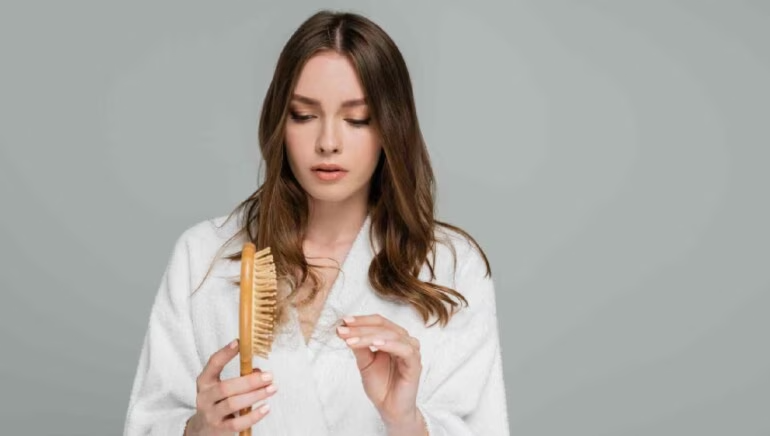
- A widening part, sudden shedding or noticeable loss of volume may indicate a condition worth investigating.
The main difference between hair density and hair thickness is that density refers to how many strands you have, while thickness describes how wide each individual strand is. Both influence how full your hair looks, but they are separate characteristics.
Ever wondered why someone with fine hair can have a surprisingly full ponytail, while another person with thick strands struggles to achieve the same volume?
Understanding these differences can help you choose better haircare products, find suitable hairstyles and recognise potential signs of hair thinning.
What Is the Difference Between Hair Density and Hair Thickness?
Hair density measures the number of hair strands growing within a specific scalp area, while hair thickness measures the diameter of a single strand.
Here's how they compare:
| Feature | Hair Density | Hair Thickness |
|---|---|---|
| Definition | Number of strands in a scalp area | Diameter of individual strands |
| Measurement | Hairs per cm² | Micrometres (µm) |
| Categories | Low, medium or high density | Fine, medium or coarse |
| Main visual effect | Scalp coverage and overall fullness | Individual strand body and texture |
| Influenced by | Genetics, age and hair-loss conditions | Genetics, hormones and follicle characteristics |
| At-home observation | Check scalp visibility | Feel individual strands |
| Haircare focus | Volume, coverage and reducing breakage | Conditioning, strength and manageability |
One common misunderstanding is that having thick hair automatically means having a lot of hair.
In reality, someone can have relatively few strands that are individually coarse, while another person has many fine strands.
What Is Hair Density, and Why Does It Matter?
Hair density refers to the number of individual hair strands growing within a defined area of your scalp.
Dermatologists commonly measure it in hairs per square centimetre (hairs/cm²).
People with high-density hair have more strands occupying the same scalp area, while those with low-density hair have fewer.
How Much Hair Density Is Normal?
There is no single number that defines healthy hair density for everyone.
A 2020 study involving 239 healthy Thai adults found that hair density varied across different scalp regions. Researchers also observed lower average density among older participants, particularly when comparing those in their 20s with those in their 60s.
However, hair diameter remained relatively consistent between age groups in this study.
For Singaporeans, these findings highlight why comparing your hair with someone else's may be misleading. Genetics, age and individual characteristics influence what is normal.
Your natural baseline matters more than whether your hair looks as dense as someone else's.
What Does Low-Density Hair Look Like?
Common characteristics include:
- More visible scalp when your hair is parted
- A smaller ponytail or reduced overall fullness
- Hair that looks flatter near the roots
- Less scalp coverage when styling your hair
However, visible scalp does not automatically indicate hair loss. Lighting, hair colour, texture and styling can affect how dense your hair appears.
What Is Hair Thickness, and How Is It Different?
Hair thickness describes the diameter of an individual hair shaft, measured in micrometres (µm).
For example, a strand measuring 70 µm has a diameter of 0.07 mm.
Hair thickness is commonly divided into three categories:
- Fine hair: Smaller-diameter strands that feel delicate and lightweight.
- Medium hair: Strands with an intermediate diameter.
- Coarse hair: Larger-diameter strands that feel more substantial.
These categories are descriptive rather than universal medical standards.
Does Asian Hair Tend to Be Thicker?
A 2020 scientific review found that larger average hair shaft diameter is one characteristic reported in some Asian populations.
However, this does not mean every Asian person has coarse hair.
Singapore's diverse population includes people with many different hair characteristics.
Instead of choosing products solely because they are marketed for Asian hair, consider your strand thickness, scalp condition and hair texture.
Read More: Niacinamide for the Scalp: What Does It Actually Do?
Does Thicker Hair Mean Stronger Hair?
Not necessarily.
Although larger-diameter strands have more material in their cross-section, hair strength also depends on their condition.
Repeated bleaching, chemical treatments, excessive heat and rough handling can damage even naturally coarse hair.
Hair thickness describes strand size, not a guarantee of healthy or damage-resistant hair.
Can You Have Fine Hair but High Hair Density?

Yes. Hair density and strand thickness are two distinct characteristics. You can have many fine strands or fewer coarse strands, and both influence how full your hair looks.
There are four common combinations:
| Hair Type | Characteristics | Haircare Priority |
|---|---|---|
| High density + fine strands | Many lightweight strands; can look full but become weighed down | Lightweight products and volume |
| Low density + fine strands | Less scalp coverage and delicate strands | Gentle handling and root volume |
| High density + coarse strands | Many substantial strands; may feel bulky | Conditioning and manageability |
| Low density + coarse strands | Fewer strands, but each feels thick | Scalp coverage and styling |
Why Can Fewer Thick Strands Still Look Full?
Imagine two people with hair growing within the same 1 cm² scalp area:
- Person A: 200 strands, each 50 µm wide.
- Person B: 100 strands, each 100 µm wide.
Person A has twice the hair density, but Person B has strands twice the diameter.
Assuming circular strands, Person B has twice the total hair-fibre cross-sectional area, even though they have half as many strands.
However, this does not mean their hair will look twice as full. Hair length, curl pattern, styling and strand distribution also affect appearance.
The point is simple: Both strand count and strand thickness contribute to overall hair fullness.
How Can You Check Your Hair Density and Thickness at Home?
You can make a rough assessment using a mirror and individual hair strands, although accurate measurements require professional equipment.
How to Check Hair Density
- Examine your dry hair under consistent lighting.
- Part your hair in its usual position.
- Observe how much scalp is visible.
- Check whether your ponytail feels relatively full or small.
- Compare your appearance with older photographs.
If your scalp has always been relatively visible, you may naturally have lower-density hair. However, scalp visibility alone cannot confirm your density or rule out hair loss.
If your parting has widened or your ponytail has become noticeably smaller, consider investigating the change.
Read More: Fine Hair vs Thinning Hair: How to Tell the Difference
How to Check Hair Thickness
Take a single shed strand and examine it against a contrasting background.
- Fine hair: Difficult to see or feel between your fingers.
- Medium hair: Noticeable but not especially substantial.
- Coarse hair: Easier to see and feel.
These are rough observations, not precise tests. Hair damage can also make a fine strand feel unusually rough.
For more accurate measurements, dermatologists can use magnified scalp imaging, including trichoscopy.
What Affects Hair Density and Hair Thickness?
Genetics is a major influence, but ageing, hormonal changes, health conditions and haircare habits can also affect your hair.
Genetics and Ageing
Genetics influences your natural follicle characteristics and hair shaft diameter.
As people age, some may experience reduced hair density or follicular miniaturisation, where affected follicles gradually produce finer strands.
This process can occur in pattern hair loss.
Nutrition and Overall Health
Adequate nutrition supports normal hair growth.
Protein, iron and other essential nutrients help keep your hair healthy. Nutritional deficiencies can contribute to hair loss, but taking extra supplements does not necessarily improve growth if your nutrient levels are already sufficient.
A balanced diet is a good starting point. If you suspect a deficiency, speak to a healthcare professional before taking supplements.
Heat and Chemical Damage
Frequent bleaching, straightening treatments and excessive heat can weaken hair fibres.
Although these practices do not necessarily reduce the number of follicles, breakage can make hair appear less full.
Repeatedly tight hairstyles may also contribute to traction alopecia, a form of hair loss caused by prolonged tension.
How Should You Care for Different Hair Types?
The right routine depends on your strand thickness, density and scalp condition.
For Singaporeans, warm and humid weather can also affect how hairstyles hold their shape throughout the day.
Fine Hair
Fine strands can become weighed down by heavy products.
Try:
- Lightweight shampoos and conditioners
- Applying conditioner mainly to the mid-lengths and ends
- Using small amounts of styling products
- Avoiding excessive heat
- Choosing hairstyles that create root volume
Volumising products can temporarily make hair appear fuller by changing how strands feel or sit. However, they do not permanently change your natural hair shaft diameter or increase the number of follicles.
Coarse Hair
Coarse strands may benefit from conditioning and gentle detangling.
Consider:
- Conditioners suited to your hair's dryness level
- Leave-in conditioners when needed
- Wide-tooth combs for detangling
- Heat protection before styling
- Limiting unnecessary chemical treatments
Coarse hair does not automatically require heavy products, especially if your scalp becomes oily easily.
High-Density Hair
With more strands to manage, washing and detangling may require additional attention.
Useful habits include:
- Sectioning hair when applying conditioner
- Detangling gently
- Rinsing products thoroughly
- Choosing manageable haircuts
- Using lightweight styling products when necessary
Low-Density Hair
Focus on protecting existing strands and improving their appearance.
You can:
- Avoid excessively tight hairstyles
- Choose cuts that create the appearance of fullness
- Reduce breakage through gentle handling
- Use lightweight volumising products
- Monitor changes in scalp coverage
If your low density is natural and stable, medical treatment may not be necessary.
Can You Actually Increase Hair Density or Thickness?
Haircare products can improve how full and healthy your hair looks, but increasing actual density or strand diameter depends on the underlying cause.
Shampoos, conditioners and styling products can:
- Reduce breakage
- Improve smoothness
- Make hair easier to manage
- Provide temporary volume
- Improve the appearance of damaged strands
However, ordinary cosmetic shampoos cannot reliably create new follicles or reverse every type of hair loss.
Biotin supplements are mainly useful when a deficiency exists, while evidence for collagen and caffeine products improving hair growth remains limited or depends on the formulation.
The American Academy of Dermatology's supplement guidance also cautions against assuming that supplements automatically improve hair health.
When Can Medical Treatment Help?
Certain hair-loss conditions have evidence-based treatment options.
For example, topical minoxidil can help some people with male or female pattern hair loss. Improvements may begin after several months, and continued use is generally needed to maintain the benefits.
Results vary, as highlighted by HealthHub Singapore, so seek medical advice if you are unsure about the cause of thinning.
Other conditions, including alopecia areata, scalp inflammation or nutritional deficiencies, may require different treatments.
Rather than purchasing expensive products based on marketing claims, identify the cause of thinning first.
Medical note: This article is for general information and does not replace medical advice. If you notice sudden, persistent or progressive hair loss, consult a qualified healthcare professional.
How Do You Know If Your Hair Is Naturally Fine or Actually Thinning?
Fine hair describes naturally small strand diameter, while hair thinning refers to a reduction in hair coverage, shaft size or both over time.
Someone who has always had fine hair may have perfectly healthy follicles.
The more important question is whether your hair has changed.
Watch for:
- A widening hair part
- Increased scalp visibility
- A noticeably smaller ponytail
- A receding hairline or thinning crown
- Unusual shedding
- Patchy hair loss or scalp discomfort
According to the American Academy of Dermatology, shedding approximately 50 to 100 hairs daily can be part of the normal hair growth cycle.
However, changes from your usual shedding pattern matter more than counting every strand.
When Should You See a Dermatologist in Singapore?
Consider seeking medical advice if you notice progressive thinning, persistent excessive shedding or unexplained changes in your hair.
Sudden bald patches, painful scalp inflammation or possible scarring deserve prompt assessment.
Singapore's National Skin Centre provides specialist dermatological care for hair and scalp conditions.
A dermatologist can examine your scalp, assess hair characteristics and recommend treatment based on the underlying cause.
Knowing Your Own Hair Better
Understanding hair density vs thickness helps you make better haircare decisions.
Density determines how many strands grow on your scalp, while thickness describes the diameter of each strand. Both influence fullness, but neither alone determines hair health.
Choose products based on your actual hair characteristics, maintain gentle haircare habits and monitor changes over time. If you're experiencing noticeable thinning, seek professional advice before investing in expensive treatments.
Understanding your hair density and thickness is a good starting point for choosing products that suit your hair's needs. Top Secret Studio offers a range of haircare products in Singapore, including shampoos, conditioners and styling products, to help you build a routine suited to your hair type.
Sources
- Leerunyakul, K., & Suchonwanit, P. (2020). Evaluation of Hair Density and Hair Diameter in the Adult Thai Population Using Quantitative Trichoscopic Analysis. BioMed Research International.
- Buontempo, M. et al. (2023). Establishing Baselines of Hair Density Measurements: Variations Across Ethnicity, Scalp Region, and Measurement Techniques. Journal of the American Academy of Dermatology.
- Asian Hair: A Review of Structures, Properties, and Distinctive Disorders (2020).
- American Academy of Dermatology Association. Tips for Healthy Hair (2024).
- American Academy of Dermatology Association. 10 Hair Care Habits That Can Damage Your Hair.
- American Academy of Dermatology Association. Do You Have Hair Loss or Hair Shedding?
- American Academy of Dermatology Association. Hair Loss: Diagnosis and Treatment.
- American Academy of Dermatology Association. Supplement Secrets Unveiled (2024).
- HealthHub Singapore. Hair Loss.
- National Skin Centre, Singapore. Dermatology resources.
Frequently Asked Questions About Hair Density vs Hair Thickness
Is Hair Density More Important Than Hair Thickness?
Neither is universally more important. Density influences scalp coverage, while thickness affects individual strand size. Both contribute to overall fullness alongside hair length, texture and styling.
Can You Have Thick Hair but Low Density?
Yes. You can have relatively few strands growing on your scalp, with each strand having a large diameter. Your hair may feel thick even if your overall scalp coverage is relatively low.
Does Hair Density Decrease With Age?
Hair density can decrease with age, although the extent varies. Ageing, genetics and hair-loss conditions can influence scalp coverage. Significant or progressive thinning should be assessed.
Does Cutting Your Hair Make It Thicker?
No. Cutting hair does not change its natural diameter or increase follicle numbers. However, a shorter, blunt haircut may create the appearance of fuller hair.
Can Shampoo Increase Hair Density?
Ordinary cosmetic shampoos cannot reliably increase hair density. Volumising formulas may temporarily improve fullness, while gentle cleansing supports scalp hygiene. Actual regrowth depends on the cause of thinning.
Does Singapore's Humidity Affect Hair Thickness?
Humidity can affect frizz, shape and styling volume, but it does not directly increase natural hair shaft diameter or follicle numbers.