



Article: Niacinamide for the Scalp: What Does It Actually Do?

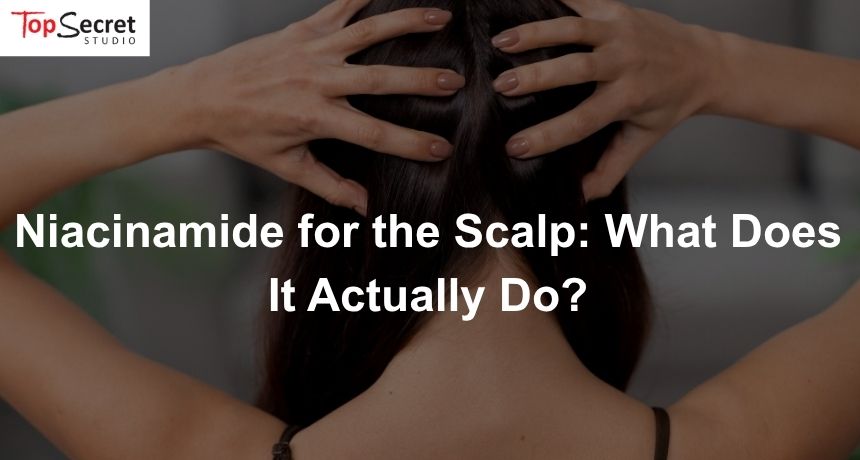
Niacinamide for the Scalp: What Does It Actually Do?
Key Takeaways
- Niacinamide is a form of vitamin B3 that helps support the skin's moisture barrier.
- Facial skincare studies suggest niacinamide may help reduce oiliness, but its effectiveness for controlling scalp oil has not been firmly established.
- Niacinamide may be suitable for dry, oily and sensitive scalps, depending on the product formulation.
- Niacinamide is not a proven treatment for dandruff or hair loss.
- Shampoos, scalp serums and tonics containing niacinamide can fit into different haircare routines.
Niacinamide for the scalp may help support the skin's moisture barrier and maintain moisture balance. It may also help with excess oil, although most research has focused on facial skin rather than the scalp. Also known as vitamin B3, this popular skincare ingredient is increasingly found in shampoos, scalp serums and other haircare products.
For Singaporeans dealing with greasy roots, occasional scalp dryness or scalp discomfort, niacinamide could be a useful addition to their routine. However, understanding what it actually does is important before buying a product.
What Does Niacinamide Actually Do for Your Scalp?
Niacinamide is a water-soluble form of vitamin B3 commonly used in skincare for its skin-conditioning and barrier-supporting properties.
Your scalp contains sebaceous glands, hair follicles and a protective outer skin layer. Like facial skin, it needs sufficient moisture and a functioning barrier to stay comfortable.
Niacinamide may help by:
- Supporting moisture retention: Encourages the production of ceramides and other skin lipids that help reduce water loss.
- Potentially managing excess oil: Facial skincare research suggests niacinamide may help reduce oiliness, although scalp-specific results remain uncertain.
- Supporting scalp comfort: May help maintain the skin barrier, particularly when dryness contributes to discomfort.
Research specifically investigating niacinamide on the scalp remains limited. Many potential benefits are based on broader skincare studies rather than direct clinical trials involving scalp products.
Is Niacinamide Good for an Oily Scalp?
Niacinamide has shown potential for managing facial oiliness, but more research is needed to determine whether it offers similar benefits for oily scalps.
Sebum is the natural oil produced by your skin. While it helps protect the skin, excess oil can leave hair looking greasy and flat.
Singapore's hot, humid weather can make greasy roots particularly noticeable, especially after commuting, exercising or spending time outdoors.
A study published in the Journal of Cosmetic and Laser Therapy investigated the effects of 2% niacinamide on facial oil production. Researchers observed improvements in certain oiliness measurements, although the results differed between study populations.
These findings are promising, but they do not confirm that niacinamide works the same way on the scalp.
Can Niacinamide Replace Regular Shampooing?
No. Niacinamide does not remove accumulated sweat, oil or styling products.
If you have an oily scalp, continue washing your hair according to its needs. A lightweight niacinamide serum or suitable shampoo may complement your existing routine rather than replace proper cleansing.
How Does Niacinamide Support the Scalp Barrier?
Your scalp barrier is the outermost protective layer of skin. It helps retain moisture while limiting exposure to external irritants.
When this barrier becomes compromised, your scalp may feel dry, tight or uncomfortable.
Niacinamide may support barrier function by encouraging the production of protective skin lipids, including ceramides.
Research published in the British Journal of Dermatology found that topical nicotinamide, another name for niacinamide, improved skin lipid production and reduced water loss in dry skin.
Although the study did not specifically examine the scalp, its findings help explain why niacinamide is used in scalp-conditioning formulations.
Can Niacinamide Help With Scalp Irritation?
Niacinamide may help support the skin's moisture barrier, which could improve scalp comfort when dryness is a contributing factor. However, evidence that it directly relieves scalp irritation remains limited.
Persistent redness, itching or flaking may indicate conditions such as dandruff, eczema or contact dermatitis.
Niacinamide is not a replacement for appropriate treatment, particularly when symptoms continue or worsen.
Who May Benefit From Niacinamide Scalp Products?
Niacinamide is a versatile skincare ingredient, but its usefulness depends on your scalp type and the complete product formulation.
| Scalp Type | Potential Benefits | What to Consider |
|---|---|---|
| Oily scalp | Potential oil-control benefits based mainly on facial skin research | Choose lightweight formulations |
| Dry scalp | May support the moisture barrier based on broader skin research | Look for additional hydrating ingredients |
| Sensitive scalp | May support skin-barrier health | Avoid known irritants and fragrances that trigger reactions |
| Combination scalp | May provide general skin-conditioning benefits | Choose balanced, non-greasy products |
| Dandruff-prone scalp | May complement a gentle scalp-care routine | Does not replace appropriate dandruff treatment |
Is Niacinamide Suitable for Sensitive Scalps?
Niacinamide is generally considered well tolerated in cosmetic formulations.
However, sensitive scalps may still react to fragrances, preservatives or other ingredients in a product.
Introduce new products gradually and discontinue use if you experience burning, redness or worsening irritation.
How Often Should You Use Niacinamide on Your Scalp?
There is no universally established frequency for using niacinamide on the scalp.
How often you apply it depends on the product type, formulation and manufacturer's instructions.
| Product Type | Usage Approach |
|---|---|
| Niacinamide shampoo | Use according to your regular washing needs |
| Scalp serum | Follow label directions; some are designed for daily use |
| Scalp tonic | Apply as recommended by the manufacturer |
| Scalp mask | Use occasionally according to product instructions |
For leave-in treatments, apply the recommended amount directly to the scalp rather than saturating your hair.
How Long Does Niacinamide Take to Work?
Niacinamide should not be expected to deliver immediate or guaranteed improvements in scalp oiliness or dryness.
A clinical study of 2% niacinamide examined changes in facial oiliness over several weeks. However, there is no established timeframe for seeing results when using niacinamide on the scalp.
Follow your product's instructions and monitor how your scalp responds. If irritation develops, stop using the product.
What Haircare Products Contain Niacinamide?
Niacinamide is found in several haircare products, from everyday shampoos to leave-in scalp treatments. At Top Secret Studio, we offer a selection of haircare products containing niacinamide to suit different scalp concerns and preferences.
Niacinamide Shampoos
Niacinamide shampoos combine regular cleansing with scalp-conditioning ingredients. They may suit those who prefer a simple haircare routine without additional treatment steps.
For example, our Moroccanoil Master Scalp Balancing Shampoo contains niacinamide and salicylic acid. Designed to cleanse the scalp while addressing visible flakes, excess oil and discomfort, it may appeal to those looking for a more balanced scalp-care routine.
We also carry the Davines Naturaltech Energizing Shampoo, formulated with niacinamide and caffeine. It gently cleanses the hair and scalp, making it an option for those who want to incorporate scalp-conditioning ingredients into their regular wash routine.
For a more refreshing cleanse, our BLACK FORET Frozen Cool & Clarifying Shampoo contains niacinamide, dexpanthenol and salicylic acid. Its clarifying formula is designed to remove excess oil and buildup while leaving the scalp feeling refreshed.
Because shampoos are rinsed off, their conditioning effects depend on the complete formulation and how they are used.
Niacinamide Scalp Serums
Scalp serums are typically leave-in treatments applied directly to the scalp. They may appeal to those who want additional scalp care without adding another washing step.
At Top Secret Studio, we offer the L'Oréal Professionnel Scalp Advanced 5-in-1 Serum, which contains niacinamide among its ingredients.
Its lightweight, non-greasy texture may be particularly appealing to those with oily roots or fine hair. As a leave-in treatment, it offers a convenient way to incorporate scalp-conditioning ingredients into a regular routine.
However, niacinamide's effectiveness for scalp oil control has not been conclusively established, and results depend on the overall formulation.
Niacinamide Scalp Tonics
Scalp tonics usually have watery, lightweight formulations that are easy to distribute across the scalp.
They may be particularly appealing in Singapore's hot, humid weather, especially for those who prefer refreshing products that do not leave their roots feeling heavy.
When exploring our scalp-care range, check the individual product ingredients to see whether niacinamide is included. Not every scalp tonic contains this ingredient, even if it is designed for scalp balance or hydration.
Niacinamide Scalp Masks
Scalp masks are occasional treatments that may combine niacinamide with moisturising or conditioning ingredients.
They can be a useful addition for those who enjoy a more comprehensive scalp-care routine, although their benefits depend on the complete formulation.
If you have a sensitive scalp, pay attention to the ingredient list before choosing a product. More ingredients do not necessarily mean better results, particularly when certain fragrances or other components may cause irritation.
What Should You Look for When Buying Niacinamide Haircare Products?
Choosing the right product involves more than checking whether niacinamide appears on the packaging.
Consider these factors before purchasing:
- Scalp Type: Select a formulation suited to oily, dry or sensitive skin.
- Complementary Ingredients: Glycerin, panthenol and ceramides may provide additional conditioning or moisturising benefits.
- Product Texture: Lightweight serums and tonics may be more comfortable for fine hair in Singapore's humidity.
- Concentration: Higher niacinamide percentages are not automatically better. There is no established optimal concentration for scalp use.
Also, avoid applying multiple new scalp treatments simultaneously. Introducing products individually makes it easier to identify what works and what causes irritation.
Can Niacinamide Help With Hair Growth or Dandruff?
Niacinamide supports skin conditioning, but it should not be confused with a clinically established hair-growth treatment.
Current human evidence does not establish that niacinamide alone stimulates hair growth or reverses hair loss.
Similarly, niacinamide is not a proven treatment for the underlying causes of dandruff.
Persistent dandruff may require targeted ingredients such as ketoconazole, selenium sulfide or other suitable medicated shampoo ingredients.
If your main concern is significant hair shedding, persistent itching or recurring scalp inflammation, seek professional advice instead of relying on cosmetic scalp products alone.
Is Niacinamide Worth Adding to Your Haircare Routine?
Niacinamide for the scalp may be worth considering if you want to support moisture balance and skin-barrier function. It may also offer oil-control benefits, although these have not been firmly established in scalp-specific studies.
While research directly involving the scalp remains limited, niacinamide's established skin-conditioning properties make it an ingredient worth considering in well-formulated haircare products. The key is choosing something suitable for your scalp rather than focusing on high concentrations or dramatic claims.
Explore the haircare options available through Top Secret Studio to find products that complement your daily scalp-care routine. Top Secret Studio offers a range of haircare products in Singapore, giving shoppers options for different hair and scalp-care preferences.
Medical Disclaimer: This article is for general information only and is not a substitute for professional medical advice. If you experience persistent scalp irritation, significant hair loss or recurring dandruff, consult a qualified healthcare professional.
Sources
- Draelos, Z. D., Matsubara, A., & Smiles, K. (2006): The Effect of 2% Niacinamide on Facial Sebum Production, Journal of Cosmetic and Laser Therapy.
- Tanno, O., et al. (2000): Nicotinamide Increases Biosynthesis of Ceramides as Well as Other Stratum Corneum Lipids to Improve the Epidermal Permeability Barrier, British Journal of Dermatology.
- Oblong, J. E., et al. (2020): Topical Niacinamide Does Not Stimulate Hair Growth Based on the Existing Body of Evidence, International Journal of Cosmetic Science.
- American Academy of Dermatology: Tips for Healthy Hair.
- American Academy of Dermatology: How to Treat Dandruff.
- Health Sciences Authority, Singapore: Regulatory Overview of Cosmetic Products.
Frequently Asked Questions About Niacinamide for Scalp Care
Is Niacinamide Good for the Scalp?
Niacinamide may help support the scalp's moisture barrier and overall skin condition. However, research specifically examining its effects on the scalp remains limited.
Can Niacinamide Reduce an Oily Scalp?
Niacinamide may help reduce oiliness, based on facial skincare research. However, its effectiveness for scalp oil control has not been conclusively established.
Does Niacinamide Help With Hair Growth?
Niacinamide has not been proven to stimulate hair growth or reverse hair loss. Its established skincare benefits mainly relate to skin conditioning and moisture-barrier support.
Can I Use Niacinamide on My Scalp Every Day?
Some niacinamide scalp products are designed for daily application. Always follow the manufacturer's instructions and reduce or stop usage if irritation occurs.
Is Niacinamide Better Than Salicylic Acid for the Scalp?
Neither is universally better. Niacinamide is mainly used for skin conditioning and barrier support, while salicylic acid helps remove dead skin cells and can also be an ingredient in dandruff shampoos. The right choice depends on your scalp concern and the product formulation.
Can Niacinamide Help With Dandruff?
Niacinamide may support scalp-barrier health, but it is not a proven dandruff treatment. Persistent dandruff may require medicated shampoos or professional evaluation.
Read more

Why Hair Gets Drier, Finer and Harder to Manage With Age
Discover why ageing hair becomes drier, thinner and less manageable, plus practical ways to care for mature hair and scalp.
Read more