


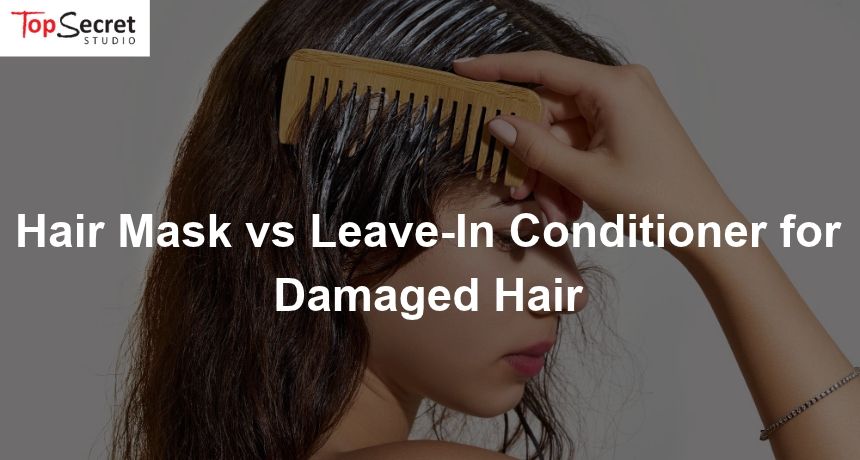
Hair Mask vs Leave-In Conditioner for Damaged Hair
Key Takeaways
- Hair masks provide intensive conditioning for dry, coarse or chemically damaged hair.
- Leave-in conditioners help with everyday softness, detangling and frizz control.
- Bleached and heat-damaged hair benefits from targeted treatments and protective haircare habits.
- Both products can work together, but excessive layering may weigh down fine hair.
- Neither treatment permanently reverses damage. The goal is to improve manageability and prevent further breakage.
A hair mask is generally better for intensive conditioning, while a leave-in conditioner is more practical for everyday softness and manageability. For damaged hair, using both may provide additional conditioning benefits, depending on your hair type and the formulas used.
In Singapore's humid climate, finding the right balance matters. Hair can feel dry and brittle along its lengths while becoming greasy or weighed down near the scalp.
Whether your hair has been bleached, coloured or exposed to frequent heat styling, understanding how these treatments work can help you build a routine without unnecessary product build-up.
Hair Mask vs Leave-In Conditioner: What's the Difference?
The main difference between a hair mask and a leave-in conditioner is how each product is used.
Hair masks are generally designed for more intensive conditioning during washing, while leave-in conditioners remain on the hair to improve softness and manageability between washes. Their effectiveness depends on the formulation, not simply the product label.

These are general guidelines. Some specialised masks have different application methods, so always follow the manufacturer's instructions.
The best treatment depends on your hair's condition, texture and the ingredients used.
How Do Hair Masks Work?
Hair masks improve softness and manageability by depositing conditioning ingredients onto the hair fibre. Depending on the formulation, some ingredients may also interact with or penetrate parts of the hair structure.
The outer layer of each hair strand is called the cuticle. Bleaching, colouring, brushing and heat styling can damage this protective surface, leaving hair rougher and more vulnerable to breakage.
Conditioning ingredients help smooth the surface and reduce friction between strands, making hair easier to comb and less prone to mechanical damage.
A 2023 review published in Polymers explains how conditioning agents can deposit on damaged areas of the hair surface. However, because hair fibres cannot regenerate biologically, these improvements do not mean the original structure has been completely restored.
What Ingredients Should You Look For?
Different ingredients serve different functions:
- Fatty alcohols: Cetyl alcohol and cetearyl alcohol help soften hair.
- Conditioning agents: Behentrimonium chloride helps reduce friction and tangling.
- Hydrolysed proteins: Certain formulations can temporarily improve the properties of damaged hair.
- Silicones: Dimethicone improves smoothness, shine and manageability.
- Emollients and oils: Help lubricate strands and reduce roughness.
A longer ingredient list does not automatically mean better results. The overall formulation matters more than any single ingredient.
How Often Should You Use a Hair Mask?
If the product is intended for weekly use, start with one application and adjust according to your hair's needs and the manufacturer's instructions.
Very dry or chemically processed hair may benefit from more frequent conditioning, while fine hair may need less.
Avoid leaving rinse-off masks on overnight unless specifically instructed. Longer processing times do not guarantee better results.
How Do Leave-In Conditioners Work?
Leave-in conditioners remain on the hair after washing to improve softness, reduce tangles and control frizz between washes.
Unlike rinse-off treatments, they are formulated to provide conditioning benefits without being rinsed away.
The American Academy of Dermatology notes that leave-in conditioners can be particularly useful for long, fine, colour-treated, permed or heat-styled hair.
Benefits of Leave-In Conditioners
A suitable leave-in conditioner can help with:
- Detangling: Reduces friction and pulling during combing.
- Frizz control: Improves smoothness and limits flyaways.
- Softness: Keeps dry ends more manageable between washes.
- Styling: Improves slip and reduces mechanical stress.
- Heat protection: Certain formulas help protect against styling heat when specifically labelled for that purpose.
Not every leave-in conditioner provides heat protection. If you regularly use straighteners or curling irons, choose a product that explicitly offers this benefit.
Choosing the Right Texture for Singapore's Climate
Singapore's humid climate can make frizz more noticeable, while rich conditioning products may weigh down fine hair.
| Hair Type | Recommended Texture | What to Avoid |
|---|---|---|
| Fine, straight hair | Lightweight spray | Heavy creams |
| Thick, coarse hair | Conditioning cream | Formulas that provide insufficient softness |
| Curly hair | Moisturising cream | Products that leave hair stiff |
| Bleached hair | Targeted conditioning leave-in | Relying on softness alone |
| Oily scalp, dry ends | Lightweight leave-in | Applying rich products to roots |
Humidity does not necessarily mean your hair is adequately conditioned.
Apply leave-in products mainly to the mid-lengths and ends, where dryness and damage are often more noticeable.
Read More: Peptides for Hair & Scalp: Are They Worth it For Your Routine?
Which Is Better for Dry Hair?
For very dry hair, a moisturising hair mask may provide more intensive conditioning. For mild dryness and recurring frizz, a leave-in conditioner is often more practical.
Dry hair does not always mean damaged hair. Some hair types naturally experience more dryness, while others become rough through chemical processing or repeated styling.
When to Choose a Hair Mask
Consider a moisturising hair mask when:
- Hair feels rough immediately after shampooing.
- Ends remain stiff despite regular conditioning.
- Hair becomes difficult to detangle when wet.
- Lengths feel unusually coarse after colouring.
- Regular conditioner no longer provides sufficient softness.
When to Choose a Leave-In Conditioner
A leave-in conditioner may be more suitable when:
- Hair feels soft after washing but becomes frizzy later.
- Ends tangle throughout the day.
- You need lightweight conditioning before styling.
- Rich masks leave your hair flat or greasy.
For fine hair with an oily scalp, applying a lightweight leave-in to the ends may be more practical than frequent intensive masking.
If your hair is both dry and frizzy, consider combining a weekly mask with a small amount of leave-in conditioner after washing.
Which Is Better for Bleach and Heat Damage?
Bleached hair often benefits from targeted conditioning and damage management, while heat-damaged hair needs conditioning alongside reduced heat exposure.
Neither treatment can completely reverse severe structural damage. However, suitable products can improve manageability and help reduce further mechanical wear.
For Bleached or Colour-Treated Hair
Bleaching alters the chemical structure of hair and can damage its protective cuticle, leaving strands more porous, rough or fragile.
Prioritise:
- Conditioning masks formulated for chemically treated hair.
- Suitable strengthening or bond-targeting treatments.
- Leave-in conditioners that reduce friction.
- Gentle detangling and less heat styling.
Some specialised treatments target aspects of chemically damaged hair, but their effectiveness depends on the formulation and supporting evidence rather than marketing terms such as "bond repair".
A 2024 review in the International Journal of Cosmetic Science discusses how chemical bonds influence hair behaviour and respond to different forms of damage.
If your hair stretches excessively when wet or snaps easily after bleaching, avoid further chemical processing until you have obtained professional advice.
For Heat-Damaged Hair
Frequent blow-drying, curling and straightening can weaken hair fibres.
To minimise further damage:
- Use a conditioning mask when lengths feel rough.
- Apply leave-in conditioner after washing.
- Use a dedicated heat protectant when styling with heat.
- Reduce styling temperatures.
- Avoid repeated passes over the same section.
Can Hair Treatments Fix Split Ends?
No hair mask or leave-in conditioner can permanently reconnect split ends.
Conditioning ingredients can temporarily smooth damaged fibres, making splits less noticeable.
Trimming split ends remains the most reliable way to remove them.
Can You Use a Hair Mask and Leave-In Conditioner Together?
Yes. Hair masks and leave-in conditioners can complement each other because they serve different purposes.
A rinse-off mask conditions hair during washing, while a leave-in product helps maintain manageability afterwards.

The Correct Application Order
For conventional rinse-off masks:
- Shampoo: Gently cleanse your scalp, then rinse well.
- Apply the mask: Focus on mid-lengths and ends.
- Wait: Follow the recommended processing time.
- Rinse: Remove the mask thoroughly.
- Towel-dry: Gently squeeze out excess water.
- Apply leave-in conditioner: Use a small amount on damp lengths.
- Style: Apply heat protection if necessary.
Some specialised repair masks require different application methods, including use before conditioner or without rinsing.
Always follow the manufacturer's instructions.
Can Using Both Cause Product Build-Up?
Yes, especially when layering rich masks, creams, oils and styling products.
Common signs include:
- Hair feeling coated or waxy.
- Reduced volume after washing.
- Strands clumping together.
- Hair becoming limp despite conditioning.
If this happens, reduce the amount of leave-in conditioner or simplify your routine.
How to Build a Hair Repair Routine
An effective damaged haircare routine should address dryness, manageability and protection without becoming unnecessarily complicated.
Step 1: Identify Your Main Hair Concern
| Hair Concern | Recommended Treatment |
|---|---|
| Dry, rough ends | Moisturising hair mask |
| Frizz after washing | Leave-in conditioner |
| Bleach-related breakage | Targeted conditioning or repair treatment |
| Frequent heat styling | Leave-in conditioner and heat protectant |
| Fine hair lacking volume | Lightweight conditioner |
If several concerns overlap, prioritise preventing further damage before improving appearance.
Step 2: Create a Weekly Routine
Consider someone in Singapore with shoulder-length, colour-treated hair who washes four times weekly.
Their ends feel dry, but their scalp becomes oily quickly.
A practical routine could look like this:
| Wash Day | Treatment |
|---|---|
| Monday | Shampoo + conditioner + leave-in |
| Wednesday | Shampoo + hair mask + leave-in |
| Friday | Shampoo + conditioner + leave-in |
| Sunday | Shampoo + conditioner + leave-in |
This is an example, not a fixed schedule.
Adjust based on your washing frequency, hair texture and product instructions.
Step 3: Monitor Your Results
After each application and over several washes, observe whether your hair becomes:
- Easier to detangle.
- Softer after drying.
- More manageable between washes.
- Less prone to snapping during styling.
- Smoother without excessive greasiness.
These improvements indicate better manageability, not necessarily permanent structural repair.
Step 4: Prevent Further Damage
Even effective treatments have limitations when damaging habits continue.
Protect your hair by:
- Avoiding aggressive brushing.
- Using lower heat settings.
- Reducing unnecessary bleaching.
- Drying hair gently.
- Trimming severely split ends when necessary.
Consistent habits often matter more than adding extra treatments.
How to Choose the Right Treatment Without Overspending
The most expensive haircare product is not necessarily the best treatment for damaged hair.
Before purchasing, consider three questions.
1. Is your hair chemically damaged or simply dry?
Chemically processed hair may benefit from specialised treatments, while naturally dry hair may respond well to conventional conditioning products.
2. Does the formula suit your hair texture?
Fine hair can become weighed down by rich creams, while thicker hair may benefit from more substantial conditioning.
3. Are you buying products with different purposes?
If you already own a rich rinse-off conditioner, purchasing another similar product may offer limited additional benefits.
A lightweight leave-in could be more useful if tangling and daily frizz are your main concerns.
For most people, a suitable everyday conditioner is the foundation. Add a hair mask for intensive conditioning or a leave-in treatment for ongoing manageability, depending on what your hair needs.
Hair Mask or Leave-In Conditioner?
The choice between a hair mask and leave-in conditioner depends on your hair's condition and daily needs.
Choose a hair mask for intensive conditioning, particularly if your hair is dry or chemically processed. Choose a leave-in conditioner for everyday softness, detangling and frizz control. Combining both can be useful when the formulas suit your hair.
Top Secret Studio offers a selection of professional hair masks, conditioners and targeted treatments for different hair concerns. As a Singapore haircare retailer, Top Secret Studio offers a variety of haircare products for different hair types, conditions and styling needs.
Frequently Asked Questions About Using a Hair Mask Vs Leave In Conditioner
Is a Hair Mask Better Than Leave-In Conditioner for Damaged Hair?
A hair mask is generally better suited to intensive conditioning, while a leave-in conditioner supports everyday manageability. Using both may help when hair is very dry and prone to tangling.
Can I Use a Hair Mask Instead of Conditioner?
Yes, if the product instructions allow it. Some rinse-off masks can replace regular conditioner during a wash, although rich formulas may weigh down fine hair.
Should I Apply Leave-In Conditioner to Wet or Dry Hair?
Damp hair is a good starting point for most leave-in conditioners. Some formulas also work on dry hair to refresh frizz or dry ends.
Can I Use Leave-In Conditioner Every Day?
Yes, if your hair needs it and the formula suits frequent use. Start with a small amount and reduce application if your hair becomes greasy or weighed down.
Is a Hair Mask Good for Bleached Hair?
Yes, a suitable hair mask can improve softness and manageability in bleached hair. However, it cannot completely reverse chemical damage.
How Long Does It Take to See Results From a Hair Mask?
You may notice softer, easier-to-detangle hair after the first application. Ongoing manageability depends on the formulation, consistent conditioning and avoiding further damage.
Read more
Bond Repair vs Protein Treatment: Which Does Your Hair Need?
Not sure whether your damaged hair needs bond repair or a protein treatment? Discover how each treatment works, when to use it and why conditioning may be enough for everyday dryness and frizz. Lea...
Read more
Hair Serum vs Scalp Serum: Which Do You Need?
Compare hair and scalp serums to find the right treatment for frizz, dryness and scalp concerns.
Read more